

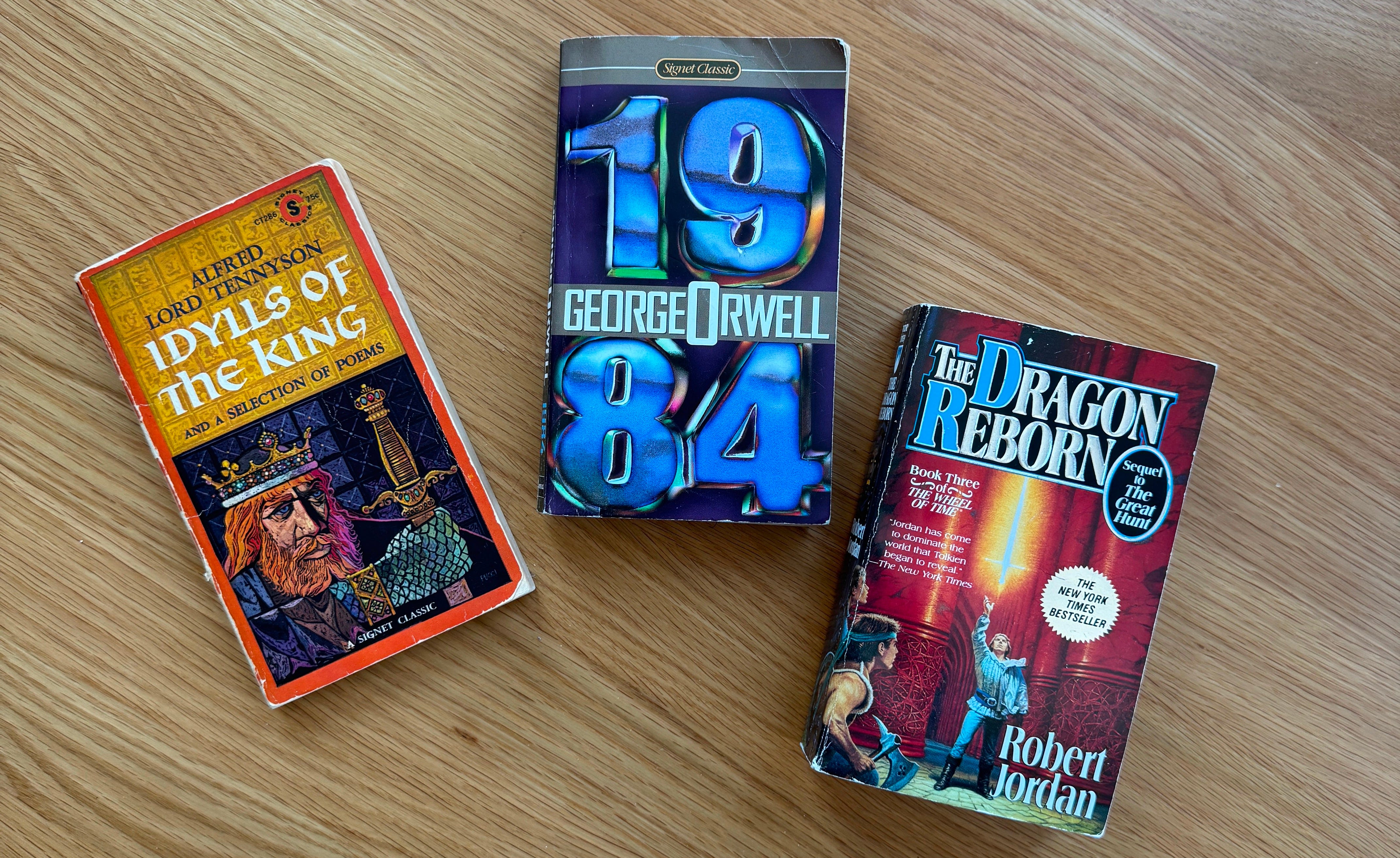
Cheap, small books are going the way of the dinosaur.
Elizabeth Harris reports for The New York Times in “So Long to Cheap Books You Could Fit in Your Pocket,” that mass market paperbacks, those squat soldiers of a portable, low-priced publishing format which have filled airport bookstores and supermarkets for decades, are rapidly disappearing.
Now, there’s no cartoonish villain here, chomping on a cigar and laughing maniacally, all while depriving the masses of their beloved books. Readers’ preferences have just changed, especially as innovations like e-readers and widespread audiobook usage, as well as cheaper methods for producing trade paperbacks, the softcover equivalent of mass markets’ fancier, grown-up siblings, have cannibalized what was mass markets’ market share.
“About 103 million mass markets were sold in 2006, the year before the Kindle was introduced. Last year, readers bought fewer than 18 million of them.”
Mass market paperbacks have been around for a little less than a century. Harris reports on their roots in 1930s England, where they were created to be sold in train stations and general stores (and for no more than the cost of a pack of cigarettes). They were cheap to make and easy to break, but an excellent way to sell thrills to readers widely and accessibly, so it’s no wonder that mass markets’ strongest associations were with genre fiction, first Westerns and Detective stories, then Romance, Science-Fiction, and Fantasy.
Their portability strikes me as a defining feature, as does their fragility. Mass markets aren’t books to be stored reverently on library shelves, but instead shoved into the bottom of a briefcase or purse and pulled out whenever a spare moment for reading comes up in the franticness of the day-to-day. Wrinkles, coffee stains, and smudges give mass markets a beautiful patina which sings of love and use. Books, after all, are meant to be read.1
As a genre fiction fan myself (that’s a grown up way of saying I’m a massive nerd), I feel indebted to mass markets, and my first copies of Dune, Hyperion, A Game of Thrones, and countless others were all published in the format. But I too have found myself increasingly buying my “low-brow” reads on my Kindle over the last few years.
Mass market paperbacks also feel small-d democratic to me, in part, I suspect, because I think a democratic society functions best when it is also a highly-literate society. On that point, Harris’ piece reminded me of an essay penned by Ursula K. Le Guin nearly two decades ago. In “Staying Awake,” for Harper’s Magazine, the titaness of American letters reacted to a National Endowment for the Arts survey from all the way back in 2004, which charted the decline of American reading.2
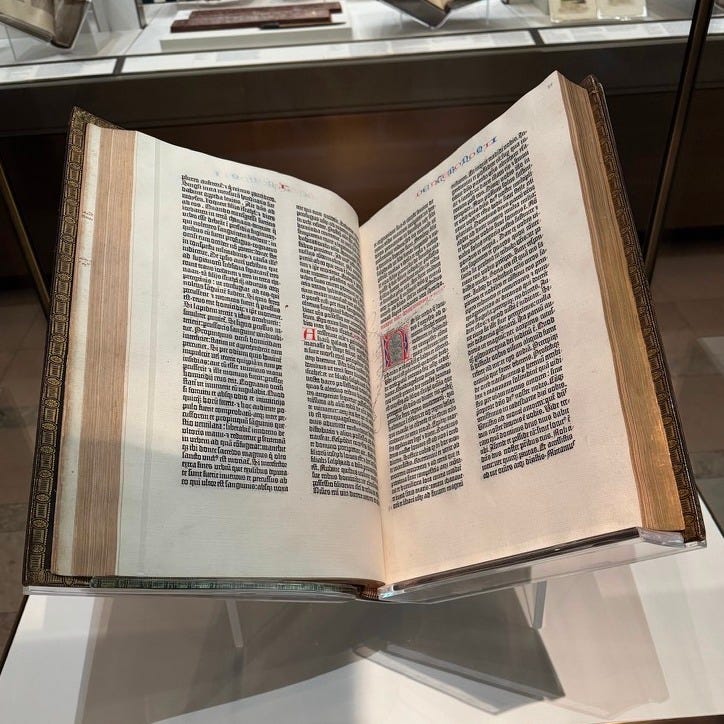
Specifically, Le Guin notes how “for most of human history, most people could not read at all. Reading was reserved for the rich and powerful, and books were treasures produced only with painstaking labor and costly materials. Gutenberg’s printing press went a long way towards reducing the barriers to entry, and changing attitudes around public education, especially in newly democratic societies, enabled what Le Guin termed a “high point of reading in the United States from around 1850 to about 1950.”
Our current domestic woes aside, and I know that’s a big aside, this nation continues to accomplish wonders of science, arts, and service. I think the seeds for many of those achievements were planted during Le Guin’s golden age of American reading. I’m not pretending that reading a detective thriller will make someone more likely to go cure cancer, but I do think frequent reading, no matter the subject, has a level of spiritual overlap with empathy and achievement that science can only begin to explain.
When we lose the mass markets, we’ll lose some of that ease of access to books, and I’m not sure we’re replacing it. While your phone is smaller than any mass market ever made, and can easily store a practically limitless number of books, with just one problem. You won’t read any of them. Individuals with the mental fortitude to open the Kindle app on their phone and read in their spare moments on the go are vanishingly rare, given how easy it is to fall into yet another doomscroll on any number of apps designed to hijack our attention.
There’s also a permanence to the print form that an e-reader just isn’t capable of reaching. LeGuin describes even earlier instances of digital prose as “electrons,” an apt-term that conveys the spirit, while also being a factually incorrect differentiator, since print books have electrons too!
Electrons are as evanescent as thoughts. History begins with the written word. Much of civilization now relies on the durability of the bound book—its capacity for keeping memory in solid, physical form. The continuous existence of books is a great part of our continuity as an intelligent species. We know it: we see their willed destruction as an ultimate barbarism. The burning of the Library of Alexandria has been mourned for two thousand years, as people may well remember the desecration and destruction of the great Library in Baghdad.
Of course, there are some publishers providing portable books, like Pushkin Press (or other small texts you’ll find in any number of front-of-bookstore displays) but I’m not sure they scratch the same itch, reach the same people, or exist at the same price point.
Ultimately, I’m just sad to see mass markets go, and grateful for what they contributed to me and society as a whole. We’re figuring out what, if any, reading format or movement will replace them. Genre fiction is selling better each and every year, even while reading as a whole continues to decline. I’m not saying the fate of the world depends on reversing that trend, but all the same—it just might.
Thanks for tuning in. As always, whether you love every word or you think I’m the internet’s dumbest boy, I’d love to hear from you directly or in the comments. And, if you’d like to (anonymously) ask a question for me to answer à la advice columns, submit it here. See you next time.
As a rule, if you’re on a vacation, and wherever you’re staying happens to have an array of books on the shelf to choose from, pick the most worn-in copies.
As you can imagine, reading rates haven’t exactly improved since then.