


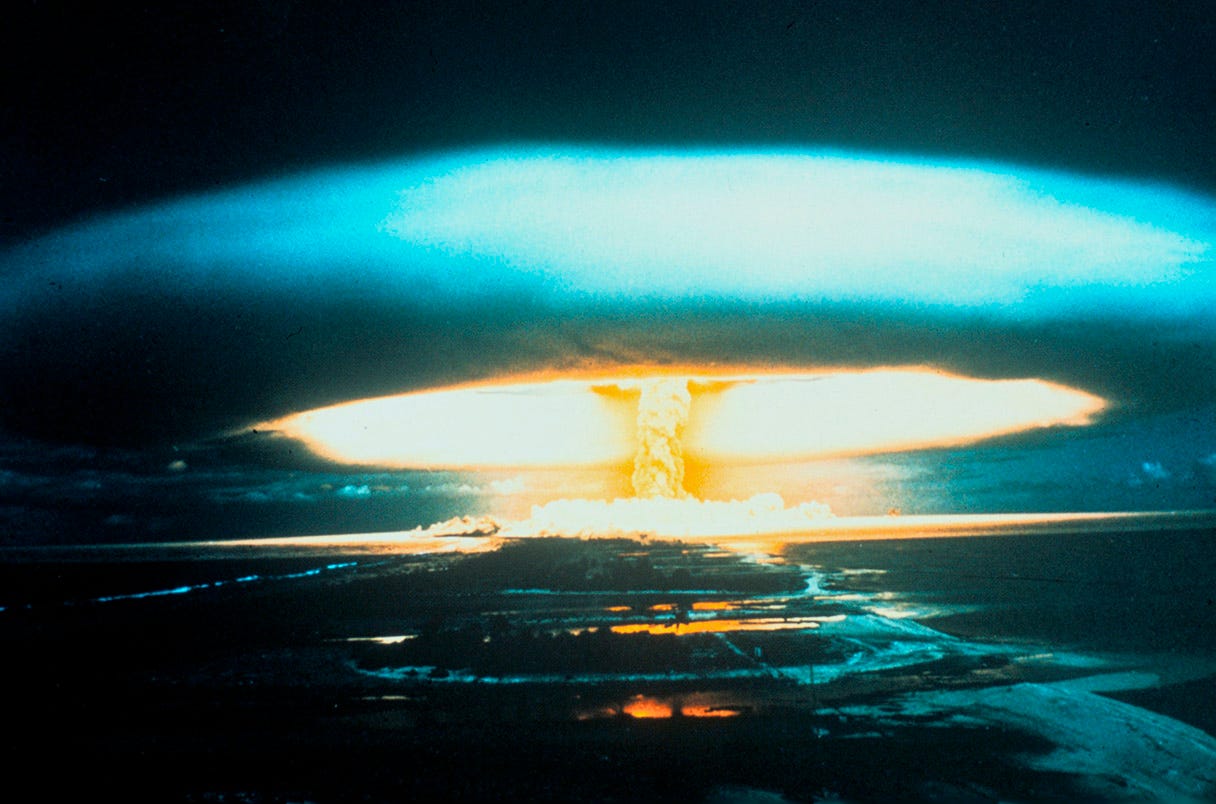
In Tuesday’s post I shoehorned in some thoughts on the threat of nuclear war, which has been front of mind for me ever since I finished Annie Jacobsen’s equally excellent and horrifying book, Nuclear War: A Scenario.
A friend reached out to discuss the post generally, and she asked me towards the end of the conversation if nuclear war was something I actually worried about.
Well, it is, and a lot of other folks worry about it too, but I think as a topic it needs a reintroduction to my generation.
After all, the days of Duck and Cover are long behind us. I grew up in the era of active shooter drills and “run, hide, fight.” I think after the Iraq War and its partial justification being Saddam’s illusory Weapons of Mass Destruction, it became easy to dismiss nuclear peril as the threat of bygone days.
Our media used the concept of atomic annihilation like it was a zombie uprising or an asteroid strike, useful primarily for marketing post-apocalyptic television shows and video games.
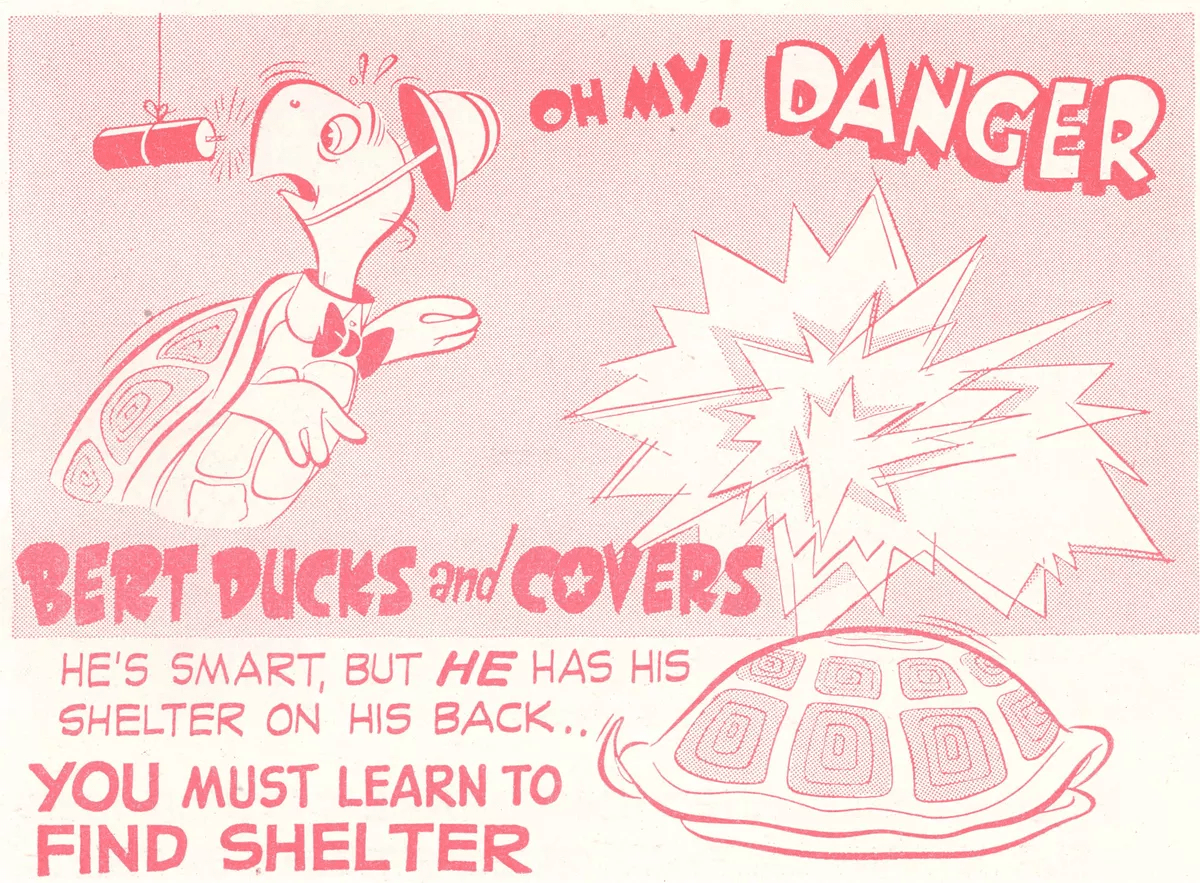
But the missiles work just as well today as they did when our parents were pretending to hide under their desks. Scratch that, they actually work much better, if you’ll take “better” to be a descriptor meaning “massively more destructive.”
China has expanded and modernized its nuclear arsenal, the Hermit Kingdom might well be able to reach the United States with a nuclear-capable ICBM, and there are ongoing frustrations in our work to reduce nuclear proliferation with Russia via New START.
All that’s to say, I’m worried and I think you should be too—up to a point. Let me explain.
Nuclear strategy continues to rely on deterrence, meaning they won’t launch at us because we’d launch at them, and then the whole thing would be over. You’re probably already familiar with the phrase “mutually assured destruction.”
The problem is, as best as war gaming can tell us, deterrence doesn’t work. If nuclear war starts, it will escalate. If it escalates, we will all die. Note that “we” is not the United States, it is humanity.1
I touched on this next idea on Tuesday, but let me expand it here: we live in a very strange moment in history. Practically speaking, up until the 1940s, humanity could wage horrific war against itself and still be reasonably certain that the species as a whole would survive. The massacres perpetrated by Genghis Khan, the genocide of indigenous American populations, and even the horrors of the Holocaust were truly terrible, but couldn’t prevent the species as a whole from continuing.
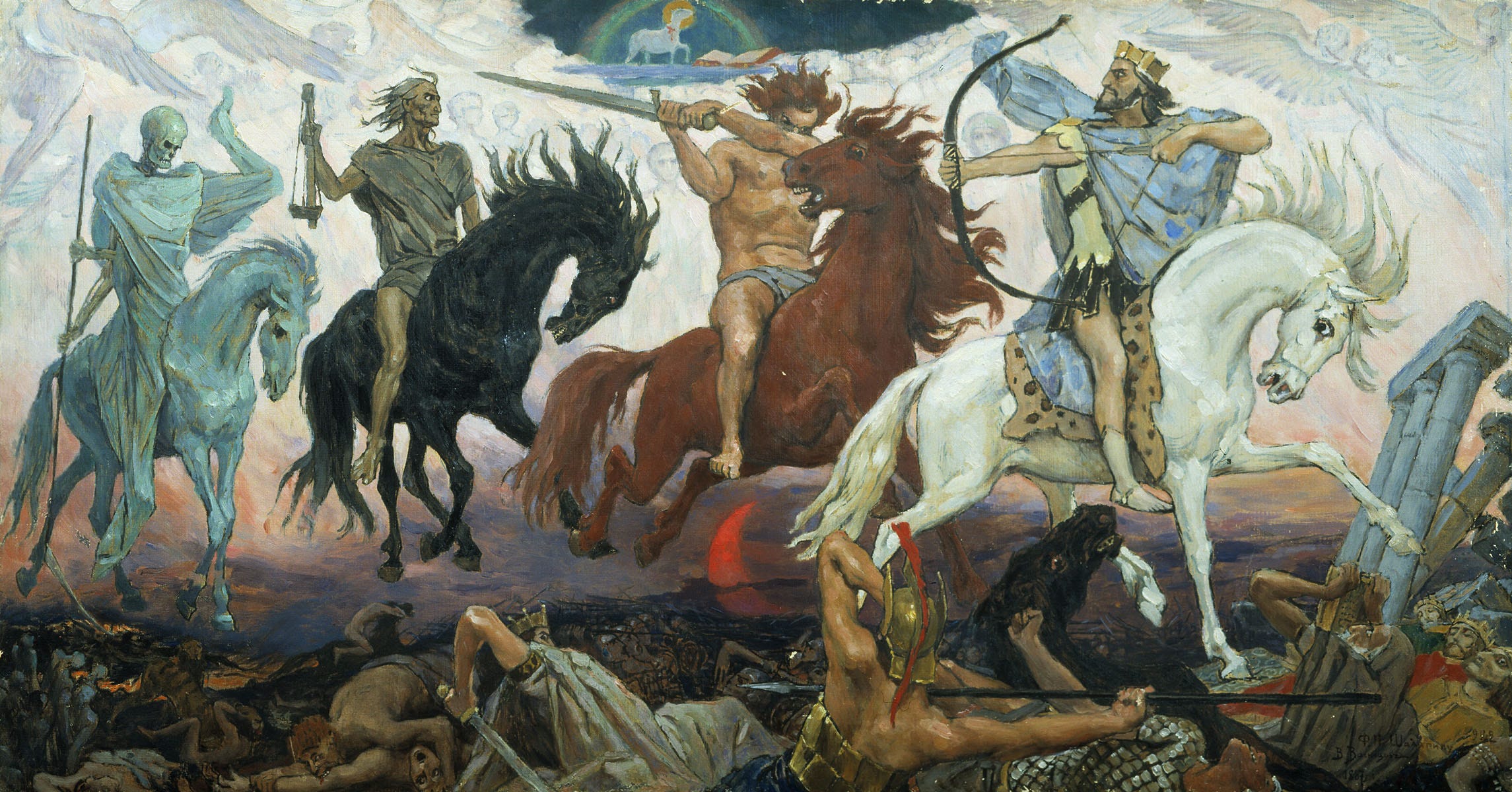
Disease, that pesky first Horseman of the Apocalypse, has killed even more of us than we could manage ourselves, but again—we’ve learned to live with it in a way that (fingers crossed) doesn’t transgress into an existential threat.
Everything changed in the early hours of July 16, 1945, when the scientists of the Manhattan Project successfully detonated a nuclear weapon. It took less than a month for atomic weapons to be unleashed, first on the people of Hiroshima and then on Nagasaki. The calculus of conflict has never been the same.2
All of a sudden our wonderful and warlike species unlocked the ability to burn the whole house down, which is plainly awful, but the horror is compounded exponentially once you realize that we only have the one house.
This is what I find strange about our generation and those around us. We’ve learned how to destroy a planet before learning how to leave it. I’m as Silicon Valley-skeptical as the next guy, but I agree with the eggheads when it comes to the imperative of making our species extraplanetary.
Trust me, I know it sounds like science fiction, and it’ll probably take centuries more to accomplish, no matter what the AI evangelists tell us. Plus there are plenty of issues to work out here on Terra firma. But spreading out above the atmosphere feels to me like the only way to ensure we keep marching on through the millennia.
All that’s to say, I don’t worry day-to-day about active nuclear war. Partially because that would be a miserable way to live and partially because there’s nothing in my martini-swilling, book-reading, Brooklyn life that affects its probability. But I do think when we make decisions about our elected leaders and which policies to support, we have to think of international relations through the lens of taking nuclear war seriously and trying to eliminate nuclear arsenals across the board.
Ultimately, even though everybody who has ever been mean to me was human, I’m still pro-humanity. I believe that our species could accomplish wonders we can’t even conceive of, stretching into a glorious future beyond reckoning, but only if we can ensure that we make it long enough without burning the whole house down.
It’s been decades since these weapons have been unleashed in war and we must do everything possible to ensure they’re never unleashed again.
So umm…happy Thursday!
Thanks for tuning in. As always, if you love every word or if you think I’m the internet’s dumbest boy, feel free to let me know directly or in the comments. See you next time.
There’s a lot to be said about why deterrence doesn’t work that I’m not going to get into here. Read Nuclear War if you’re interested.
Although Cillian Murphy did snag an Oscar out of the whole thing, so let’s call it net neutral.
I’m still anxious — great read though!