

Welcome back to the Weekend Read, where I share my favorite articles from the week. As always, I hope you’ll find something you like. ICYMI, on Sunday I talked about the end of mass market paperbacks.
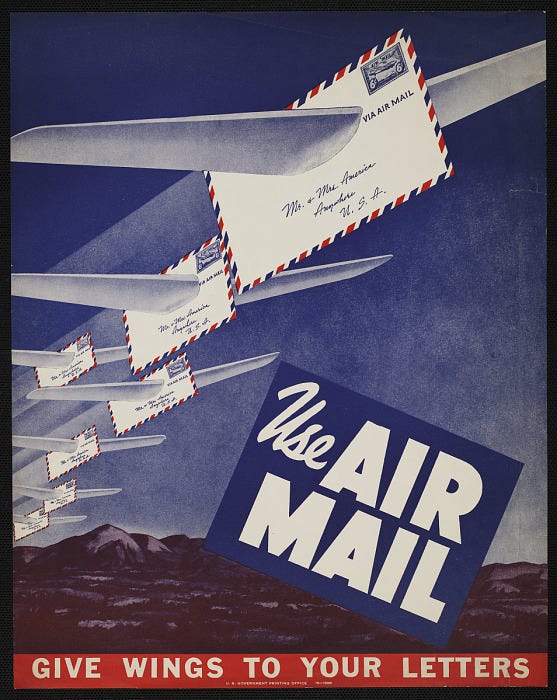
Today is February 20, 2026. On this day in 1792, the Postal Service Act was signed into law by President George Washington, establishing the United States Postal Service. The motivations behind the Act had a lot to do with getting newspapers, of all things, to subscribers. The thought was that a well-informed electorate was essential to the healthy functioning of a fledgling democracy. Funny how we now have unlimited news instantly available at our fingertips, and yet many of us are less accurately informed than ever before.
Some of this might interest you

I. “American Kids Used to Eat Everything (gift link)” by Olga Khazan (The Atlantic). As a proud nose-to-tail eater, with a personal rule that I have to order anything on the menu if I haven’t eaten it before, it’s fair to say picky eaters bother me. I don’t mean this seriously, but part of me struggles to get over my suspicion that it’s somehow a moral failing on their part, as if their hesitance to dive into the full range of culinary experiences confesses a similar reluctance to embrace the wonderful diversity of our world. I suspect God will punish me for my arrogance with a child who refuses to eat anything besides Kraft Mac & Cheese.

II. “A Guide to Which AI to Use in the Agentic Era” by Ethan Mollick (One Useful Thing). Ethan Mollick remains the best communicator on the topic of AI developments and implementation. You might have noticed an increase in AI headlines over the past few weeks as recent advancements in model capabilities have everyone gesticulating wildly again. For the record, I do think AI usage can be incredibly valuable. I also think we’re in a weird moment where the ethics of how to use it, not to mention potential cognitive effects, are very much up in the air. For us to get it right, I think more people need to be involved in both using the tools, and talking about how we should use them. If you haven’t dived in, or if you’re struggling to make sense of the new developments, Mollick’s latest primer should be helpful.
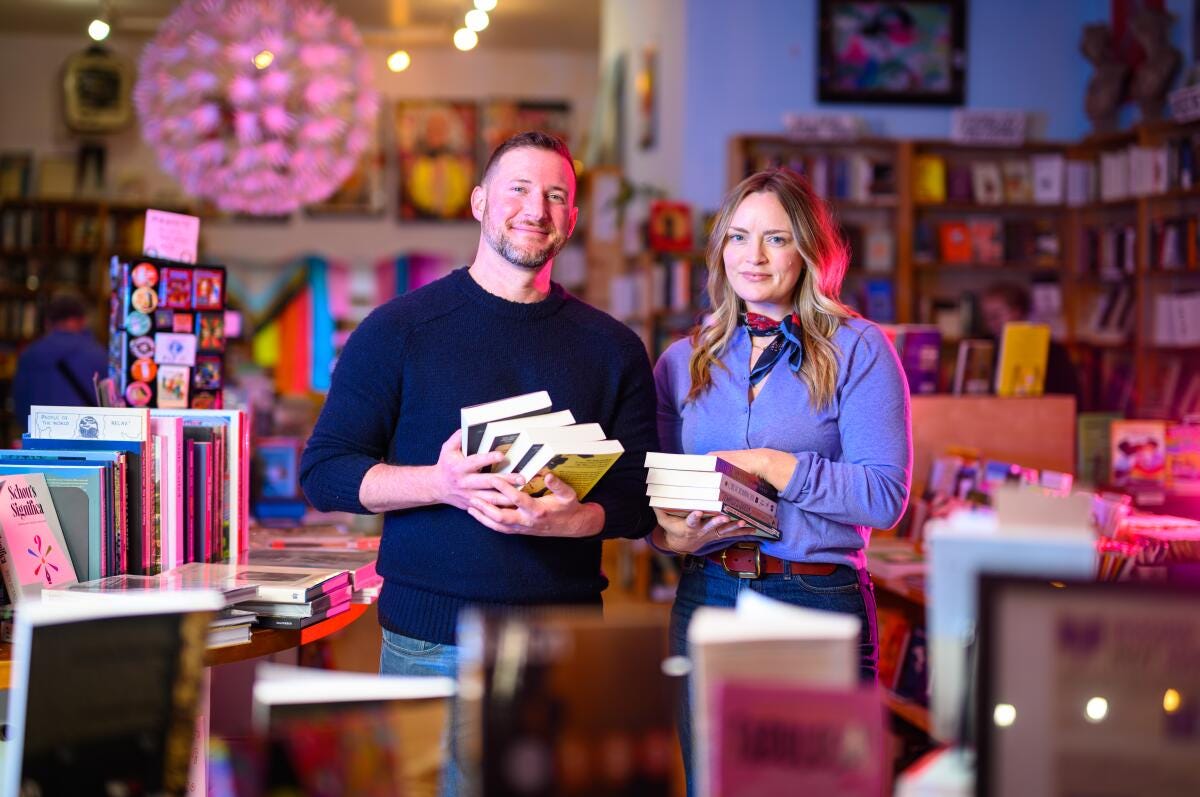
III. “This publisher enlists ‘bookfluencers’ to choose its titles. Is it working?” by Malia Mendez (Los Angeles Times). The LA Times profiles Bindery Books, a social media platform and publisher from a Patreon alumnus who’s interested in combining book-ish social media with actual book publishing. Full disclaimer, I’m launching a book club with Bindery, which you can sign up for here if you’re so inclined. The jury is out on if Bindery’s model will work, but I’m pulling for them. Screens are the biggest competition that books face as reading rates plummet globally, but book-ish social media does seem to be driving people off their phones and into pages, at least until they finish up and report back with their thoughts.

IV. “What Is Claude? Anthropic Doesn’t Know, Either” by Gideon Lewis-Kraus (The New Yorker). What exactly is AI? Turns out, we’re not entirely sure, and that introduces a whole host of complications as we seek to develop the underlying models, use AI tools ethically, and even find language to describe what it is they’re doing. This is a deep dive into Anthropic’s Claude, which has become my favorite of the tools in recent weeks. The article is long, but well worth a read, even if not all of it is entirely comforting…

V. “Time to Say Goodbye (gift link)” by David Brooks (The New York Times). David Brooks is wrapping up his long-running column for The New York Times. Although we’ve always sat on opposite sides of the aisle (not that there’s really a spot for him on his side anymore), I’ve always admired Brooks as a thinker. On an unrelated note, he gave the commencement address at my college graduation, which I’m sure was excellent, even if I was a touch too hungover to really appreciate it. In this final column, he opines on many of the problems facing America. You might not agree with all or any of his solutions, but I think we all have a stake in trying to address these issues, and I’d encourage you to read this piece and think about what your role can be.
What about me?
As for my weekend reading material, I’m focused on finishing up Renaissance-era epistolary fiction Perspective(s) (Amazon/Bookshop.org) before digging into my next boy’s book club read, The Devils (Amazon/Bookshop.org), by reigning king of Grimdark, Joe Abercrombie. This week I knocked off The Edge of Sadness (Amazon/Thriftbooks), Gender Queer (Amazon/Bookshop.org), and Game Changer (Amazon/Bookshop.org), most of which I’ve talked about or will talk about here.
Sit a minute and have a listen
I saw the new Wuthering Heights adaptation last Sunday and happened to really enjoy it, having gone in with absolutely zero context because I’ve never read the book. It’s a bit like a two-hour perfume commercial, with beautiful people, beautiful shots, and beautiful sounds—but I was still surprised when I went to listen to the soundtrack from Charli XCX this week that the Velvet Underground’s John Cale was featured on the opener. I happen to adore Cale’s masterpiece solo album Paris 1919, title track below. Give it a listen and give it a minute to sink in.
“Paris 1919” by John Cale.
Fare thee well
Thanks for tuning in. As always, whether you love every word or you think I’m the internet’s dumbest boy, I’d love to hear from you directly or in the comments. And, if you’d like to (anonymously) ask a question for me to answer à la advice columns, submit it here. See you next time.
Thanks for sharing the LA Times article, Marston! 🫶