


Welcome back to the Weekend Read, where I share my favorite articles from the week. As always, I hope you’ll find something you like. ICYMI, on Tuesday I talked about…nothing. We’ve had a short intermission while I work on a few different pieces, expect your inbox to be more frequently intruded upon in the coming weeks.
Today is October 31, 2025—more importantly, Happy Halloween! On this day in 1517, a young man walked up to a door in his town and chose trick instead of treat. I’m of course referring to Martin Luther nailing his 95 Theses to the doors of Castle Church in Wittenberg, kickstarting the Protestant Reformation. Oooooooo, spooooookyy.1
Some of this might interest you
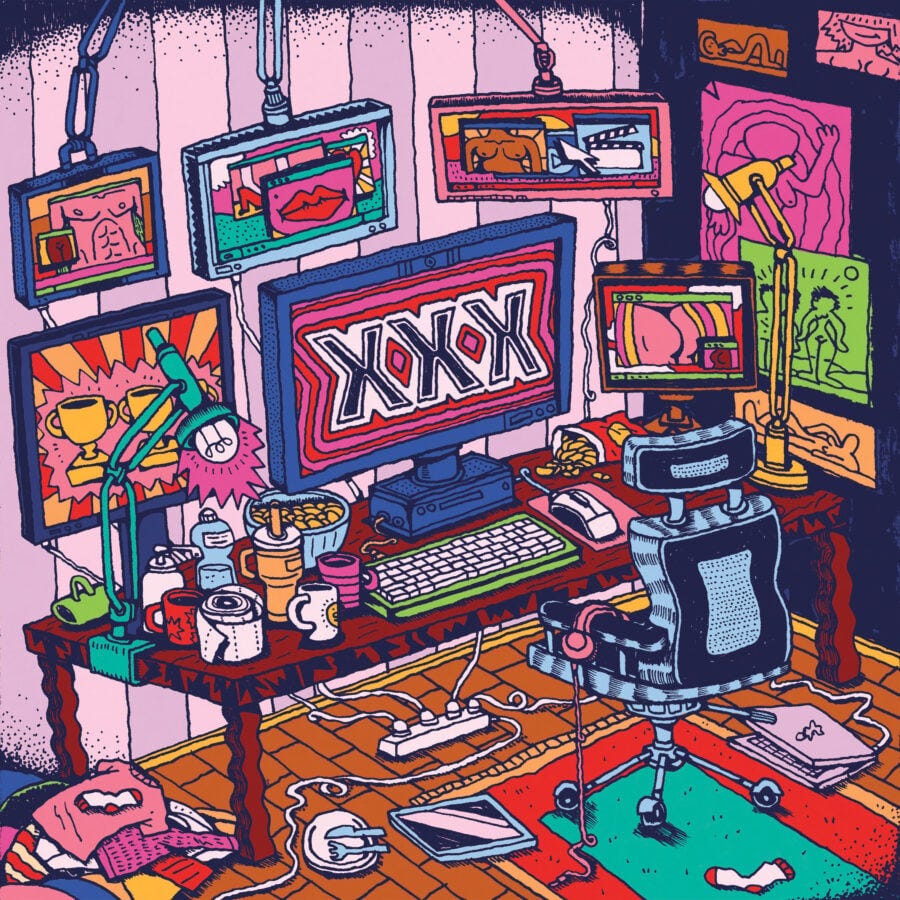
I. “The Goon Squad: Loneliness, porn’s next frontier, and the dream of endless masturbation” by Daniel Kolitz (Harper’s Magazine). First, I’m sorry for asking you to read this. Note that this article is published in Harper’s, which is 175 years old and therefore reputable. Please brave the horrors. I make no claims about the health effects—positive or negative—of masturbation, but I think pornography is coming closer and closer to a public health crisis. That’s maybe a little hyperbolic, but we’re not talking about your weird uncle’s vintage Playboys anymore. There’s more material, it’s more graphic, and it’s more widely consumed than ever before—all at a time when we’re trying to figure out what’s wrong with young men in this country.

II. “Why I Run (gift link)” by Nicholas Thompson (The Atlantic). An article about a man whose complicated relationship with his brilliant but capricious alcoholic father is somewhat softened by his gratitude for the inheritance of a running tradition? As the meme goes, “is this play about us?” Thompson is promoting his new book, which I intend to read, but I think this article from the magazine for which he is the CEO probably captures the essence of it. For some of us, running seems to be the only way to keep things moving forward.

III. “Why Biden’s White House Press Secretary Is Leaving the Democratic Party” by Isaac Chotiner (The New Yorker). Over the past few months I’ve started to relish, with a perverse glee, the experience of reading an Isaac Chotiner interview. He seems magically able, like a monster out of Greek mythology, to lure unsuspecting heroes (political figures from both sides) into his lair (New York City, I assume) before vivisecting them (asking follow-up questions that expose their flaws). His latest piece, with former White House Press Secretary Karine Jean-Pierre, is particularly brutal. In an era where most of our interactions with political figures come in the form of puff pieces and podcasts, it’s nice to read some classic gotcha journalism.

IV. “Ukraine Gamifies the War: 40 Points to Destroy a Tank, 12 to Kill a Soldier” by Kim Barker and Oleksandra Mykolyshyn (The New York Times). Mom, wake up, everything you warned us about playing Call of Duty is coming true, and now I’m scared. Is this an extension of corporate culture eating the world? Are Ukrainian generals planning a rollout of “strategic performance incentives” based on an old McKinsey deck and a $15 monthly subscription to Harvard Business Review? For as long as humanity has waged war on itself, dehumanization has been a critical component of conflict, so maybe this is just the latest version of Mongolian ear cutting.
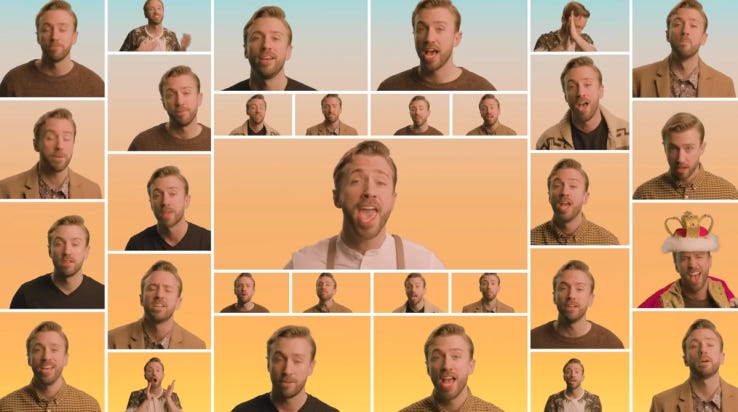
V. “The AI boom is turning old content into cash cows for creators” by Rachyl Jones (Semafor). We hear constantly about how AI is screwing over artists of all stripes, which is why I found this article about increased collaboration between (what I would dub) “mid-level” content creators and AI companies interesting. AI licensing in order to train the models will make more money for YouTube a cappella singer Peter Hollens than his advertising income this year. So, if you’re curious what the video generation models are getting trained on, take a look at the article, or Hollens himself (with a very special guest appearance from a singer whose public profile has changed a lot in the past decade).
Sit a minute and have a listen
I know, I know—first a 7,500 word article about pornography and now this, but there’s a method to the madness. Celebrity culture is too sanitized these days, now that everyone is media trained and deathly afraid of the cameras we all carry around in our pockets. “Conscious uncouplings” typically go through three layers of PR approvals before they’re announced to the public, which is why this very detailed breakup album from British singer Lily Allen regarding the infidelities in her marriage to Stranger Things star David Harbour is such a standout.
“Pussy Palace” by Lily Allen.
Fare thee well
Thanks for tuning in. Enjoy your weekend, and I’ll see you on Tuesday.

*Just kidding, just kidding.