

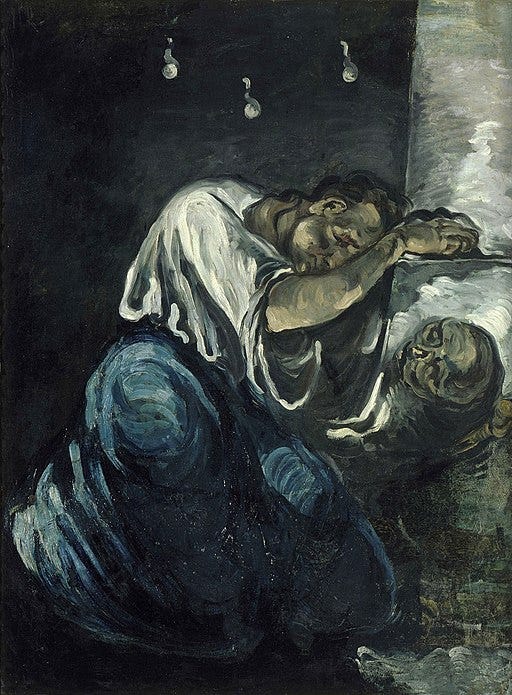
While I generally have a weak memory, I happen to know exactly how my morning started thirteen years ago today.
As it happens, on December 14, 2012, I played hooky and skipped school. It was, at the time, a nearly unprecedented act of rebellion for a relatively antisocial but fairly studious high schooler. Growing up, I was almost never sick enough to miss a day, and even if I was, I still had to convince the local Commissar, who bore a suspicious resemblance to my mother, for permission to skirt my duties. Permission was rarely granted. Skipping school just because I felt like it wouldn’t even have occurred to me.
However, by December of my senior year, we—jailor and prisoner alike—were all a bit tired of scholastic discipline, having just endured a grueling college admissions process. Even though we didn’t yet know that in a few days college acceptance would be won, standards had already been somewhat lowered, and I managed to get out of the day’s scholarly pursuits with a halfhearted “I’m not feeling up to it today.”
I was a real news junkie back then, in an earlier era of smartphones and push notifications, so by the time I rolled over mid-morning, one of the first things to greet me on my phone was an alert from some news service telling me that a school principal had been shot just down the road.1 Obviously, that was a terrible tragedy, but it didn’t so unsettle my selfish 17-year-old self that it prevented me from rolling back over and returning to sleep. It was only an hour or two later, when I heard my mom come back from running errands, that I ambled downstairs to begin my day.
This was before the anxiety of the world and my own life had reached such a sufficient fever pitch that the question “did you hear what happened?” would automatically send me into a panic, but it was immediately clear from my mother’s tone that there was nothing good on the other side of her query. When I said “no,” she provided the added context, “in Newtown?” I told her that I had seen the news that a school principal had been shot. “No,” she said, “they wiped out an entire classroom.” Then, my mom, who endured countless temper tantrums over the years to ensure her ungrateful children never missed a single day of their classroom education, began to cry.
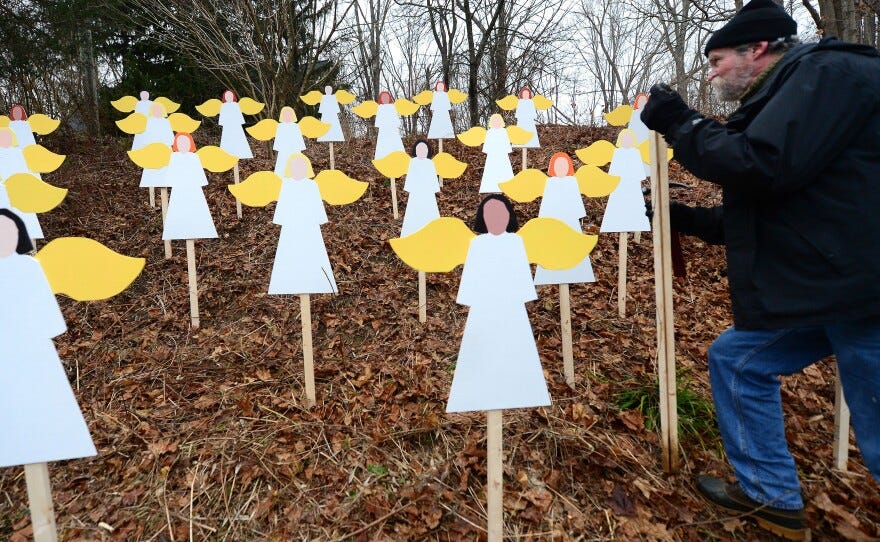
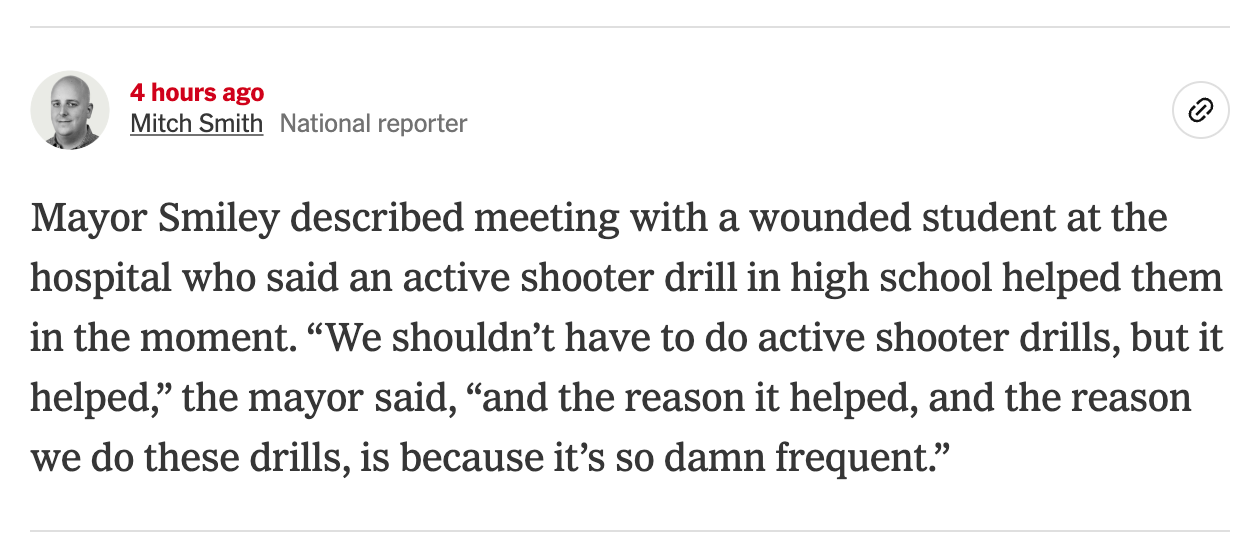
I was three, going on four, when the Columbine massacre took place. Scholars might disagree, but I’ve always pegged that event as the beginning of the school shooting crisis in this country. As a child, I never knew a time when we didn’t need to practice lockdown drills in school, and because everything is normal to children, I never thought that much of them while growing up.
For me, if Columbine heralded the beginning of the crisis, Sandy Hook and its aftermath were the announcement of our collective surrender. If we wouldn’t be willing to act to protect our youngest and most vulnerable, what hope was there that we would ever act at all? Since then, it seems each year brings a terrible cadence, because we don’t know when and where the next one will be, we just know it’s coming.
I was thinking about that cadence and its patterns last night while reading the news about the tragic killings at Brown. The date, location, and magnitude of atrocity remain surprises, but that the incidents happen doesn’t shock anymore. We’ve come to expect them—and I suspect anyone reading this can recognize the cadence common to most of these nightmares if they stop to think about it.
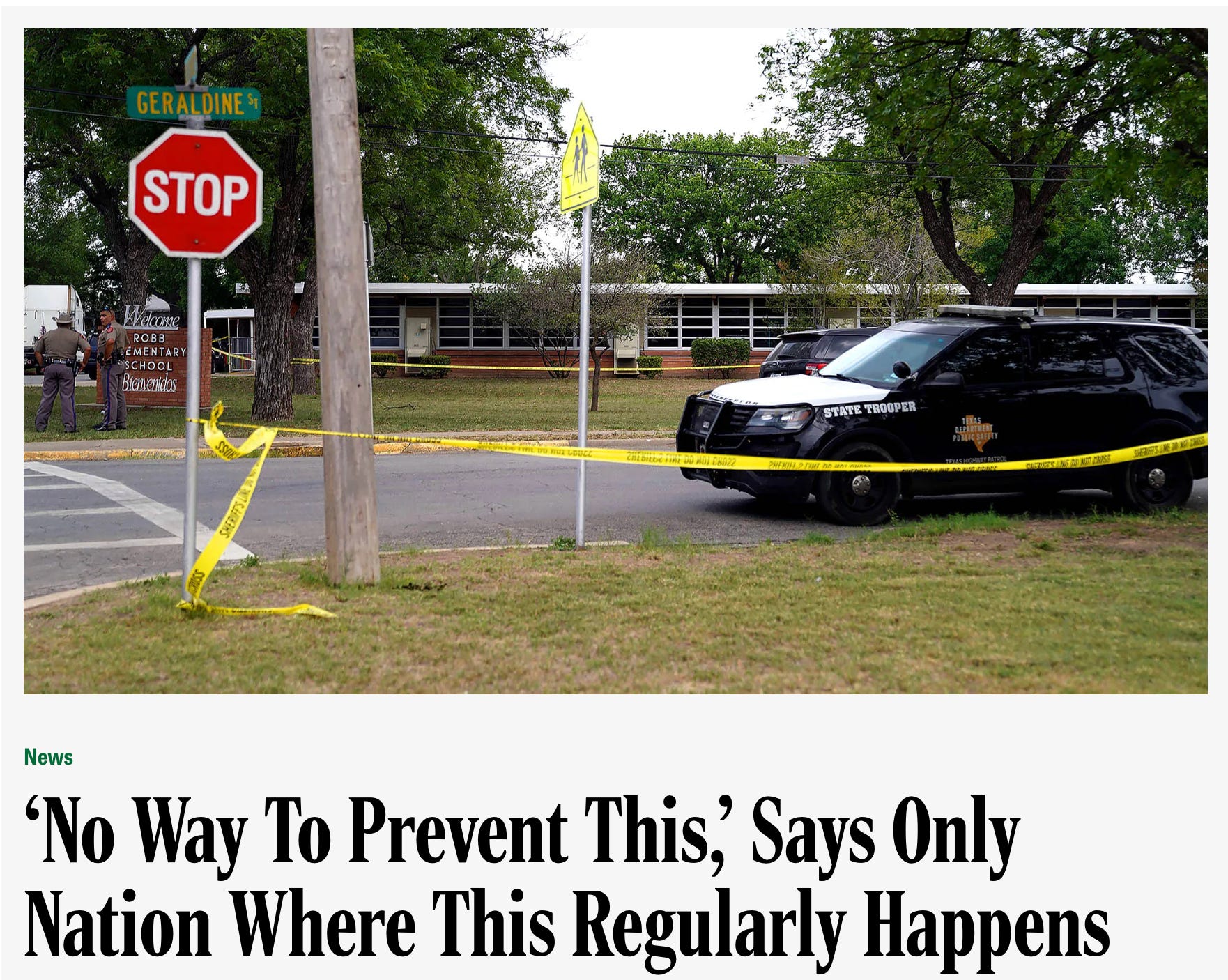
An incident happens and reports begin to roll in. Maybe you see a headline and offer a silent prayer to yourself that the number stays low, because sometimes it does, and sometimes two becomes twenty. The suspect might have died at the scene or maybe he’s on the run, but they’ll find him soon. He hasn’t been identified yet, but he is almost certainly a he, between the ages of fifteen and twenty-five, alienated from his community and angry at the world. Politicians and pundits from one side will offer thoughts and prayers, politicians and pundits from the other side will damn them and their words for not taking concrete action, but all that recrimination will turn out just to be words too, in the end. Maybe a young reporter, whose ambition temporarily blinds them to their humanity, will find a young survivor to interview, and we’ll all get to watch a child’s trauma response live and on-air. People will go online and howl at each other. The Onion might repost that famous headline. There will be speeches and funerals and excellent work from first responders, and community members, and local politicians, all striving to respond to an unimaginable tragedy that all of us regularly imagine, but all of that good work and good will can only try to heal the damage already incurred. It does nothing to stop the next tragedy.
In fact, it’s probably too late to stop the next tragedy, but having started my career working in gun-violence prevention in Chicago, I can tell you firsthand that over time, with hard work, we can prevent more of them. It’s not rocket science, if we dramatically reduce the number of guns in our homes and on the shelves of our stores, there will be far fewer crimes involving a gun.
The problem is, who’s the “we” there? Because real progress will require acts of political will from politicians who have been reluctant to do much so far, or acts of electoral will, from all of us, to replace those men and women with new politicians who will finally act.
Like a lot of things in life, it’s simple, but not easy.
This also isn’t to say that perpetrators don’t have individual responsibility. They do. The ultimate responsibility always lies with the person who pulls the trigger. But if your defense of society’s inaction is “well, it’s just that guy’s fault and it doesn’t have anything to do with me,” then I think you and I see social responsibility differently enough that I’m surprised you’re reading this in the first place.2
So, if most of us sit between potential perpetrators we don’t know and can’t stop, and legislators whose actions actually could matter, but won’t listen to us except come Election Day every few years, what’s left for those of us in the in-between to do?
Well, for what it’s worth, I’ve always suspected that “thoughts and prayers” get a bad rap.
After all, the phrase has become shorthand for offering nothing of substance towards a solution, even though thoughts and prayers are oftentimes the most an individual can offer.
Prayer, whether expressed with firm theological convictions or just silently to ourselves, accompanied by an unaware yet awe-inspiring universe, is a healthy human practice. Sharing our grief and our love with each other is a foundational act of healing and community-building. That expression of love and good-will comes in many forms and under many names, of which prayer is just one. It can happen at a distance or close up, and I suspect you already know the value that such companionship can offer. Show me two patients with the same illness and identical treatments in the hospital, and tell me only one of them has a friend sitting next to them holding their hand, and I’ll tell you which one will likely get better first.
To be clear, I don’t blame anyone for being angry at “thoughts and prayers.” I’m angry too. I’m so angry and so heartbroken and so scared that sometimes I can’t tell if all I am is anger, to the point that it’s just the normal state of affairs, or if the overwhelming din of it all has just left me numb.
I just happen to think the target of that anger is getting labeled thoughts and prayers, when, in reality our anger is aimed at the inaction and hypocrisy of everyone who offers those words but forgets that prayer doesn’t absolve us of our responsibility to act. In fact, if we’re bold enough to ask in our prayers for reprieve, then I’d argue it is demanded of us to also take actions in our lives that will enable such reprieve.
If I’m angry at anyone, it’s the people whose use of “thoughts and prayers” as a panacea, coupled with their dereliction of duty towards any actions that would bring about real change, have ruined the notion of expressing goodwill for the rest of us, because the second we see it some part of our brain wonders if it’s a dog whistle suggesting the most a person is willing to offer.
But who am I to judge? I’m not sure some days that I’ve come so far from that jaded 17-year-old who rolled back over because it was only a principal who had been shot.
Do you want to hear a horrible confession? There’s a part of me that sees a number like two, as in two dead, and thinks to myself “thank God it isn’t more,” because I’ve started to think in terms of tens and dozens when I account for the scale of tragedy. I loathe myself for that accounting, even if I can understand the onslaught of horrible events that would create it. Everything is normal to children. Everything becomes normal to everyone when it happens enough.
I don’t know anything about the two people who died last night in Rhode Island, or the fifteen killed in Australia, or the countless others gunned down at home or across the world in the decades since we’ve accepted that recurring, living nightmares are a reasonable tax to pay in order to give people routine access to weapons of war, but I know they were unique and special. They were people who were here with us for the first time and they will never be here with us again. We are all worse off for their loss.
I’ll be praying for them all tonight, and I’ll continue to put as many of my economic and political decisions as I can towards causes that seek to eradicate this self-inflicted scourge. You can learn more about a few of the organizations doing that work here.
Thanks for tuning in. As always, whether you love every word or you think I’m the internet’s dumbest boy, I’d love to hear from you directly or in the comments. And, if you’d like to (anonymously) ask a question for me to answer à la advice columns, submit it here. See you next time.
For the record, I’m counting 40 minutes as “just down the road” in the Connecticut countryside, even though I know it would be “do I need a passport to get there?” in Manhattan and “next door” in parts of Texas.
This is the third version of the sentence, and significantly kinder than the words I had in the first two versions for those who think their responsibility to the world stops at the sidewalk in front of their house.